

How much does it cost to open a gelato shop in 2026? Real costs, investment, and what to truly expect
How much do you really need to open a gelato shop?
Opening an artisanal gelato shop with an in-house production lab in 2026 typically requires between €90.000 and €200.000.
It’s the number everyone is looking for, but on its own it isn’t enough. Stopping at this figure risks giving a partial — and often misleading — picture of what it really means to launch this type of business.
Two gelato shops can start with the same initial investment and end up with completely different results. This is where the real difference is made: not in the number itself, but in how that budget is built, distributed, and used within the project.
Behind that number are technical, organizational, and structural decisions that directly affect how the gelato shop will perform over time. Understanding this step means starting to read the cost correctly. Because what you will actually need to invest depends precisely on these choices, well beyond the initial estimates.
The point is not just to open, but to do it the right way from the start. In this guide, you will find a complete overview of the real initial costs to open a gelato shop, with concrete examples and the main items to consider from day one.
Why there is no fixed cost
There is a precise moment when the idea takes shape — maybe walking past a busy gelato shop on a summer evening, or after years of thinking about it. And then the question comes: how much does it really cost to open?
The answer is never just one, because a gelato shop is not a standard business that can be replicated identically anywhere. Every project starts from different conditions: the available space, the type of production, the expected sales volume, and the way you choose to organize the work.
It is the combination of these elements that determines the real cost. For this reason, there is no single price that works for everyone — but there is the cost of your specific project, which takes shape from the very first decisions.
This is where one of the most frequent mistakes is made: estimating an investment before having defined how the business is actually meant to operate.
How much the choice of location affects the initial cost
When people talk about costs, many immediately think of equipment or the production lab. In practice, however, the most decisive factors are the location and the premises — not just the rent.
A gelato shop in a central or high-footfall area can have a rent of between €2.500 and €5.000 per month, while in a more peripheral area it falls between €800 and €1.800. On an annual basis, the difference can easily exceed €20.000 – €30.000.
To this you have to add the initial costs tied to the lease, such as the security deposit — which can amount to 3–6 months of rent — advance rent payments, and any agency fees. These costs weigh on the initial investment from day one and are often underestimated during the planning phase.
There is then another aspect often overlooked: the location also influences the type of clientele and the frequency of purchase. A tourist area can generate very high peaks, but concentrated in only a few months, while a residential area tends to ensure greater continuity throughout the year. This directly shapes the initial project decisions as well, because the type of clientele and expected volumes affect the size of the premises, the layout of the spaces, and the structure of the production lab.
The characteristics of the premises also have a direct impact on costs: the condition of the spaces, the need for renovation works, and the sizing of the lab can significantly change the initial investment, with an indicative range between €25.000 and €55.000 for premises and works. Two spaces with the same rent can require completely different interventions, with very different impacts on the budget.
The choice of premises is often made on the basis of the available budget. Trying to contain expenses by choosing a space simply because it requires less work or has a lower rent may seem logical, but in practice it risks compromising the entire project. A poorly chosen location, with little foot traffic, doesn’t work: without a flow of people, a gelato shop doesn’t generate sales and over time it closes. And when that happens, the problem isn’t the market — it’s the choices made at the beginning.
The point where everything is decided: the cost of a gelato production lab
There is a phase when the project stops being theoretical and becomes concrete: the production lab.
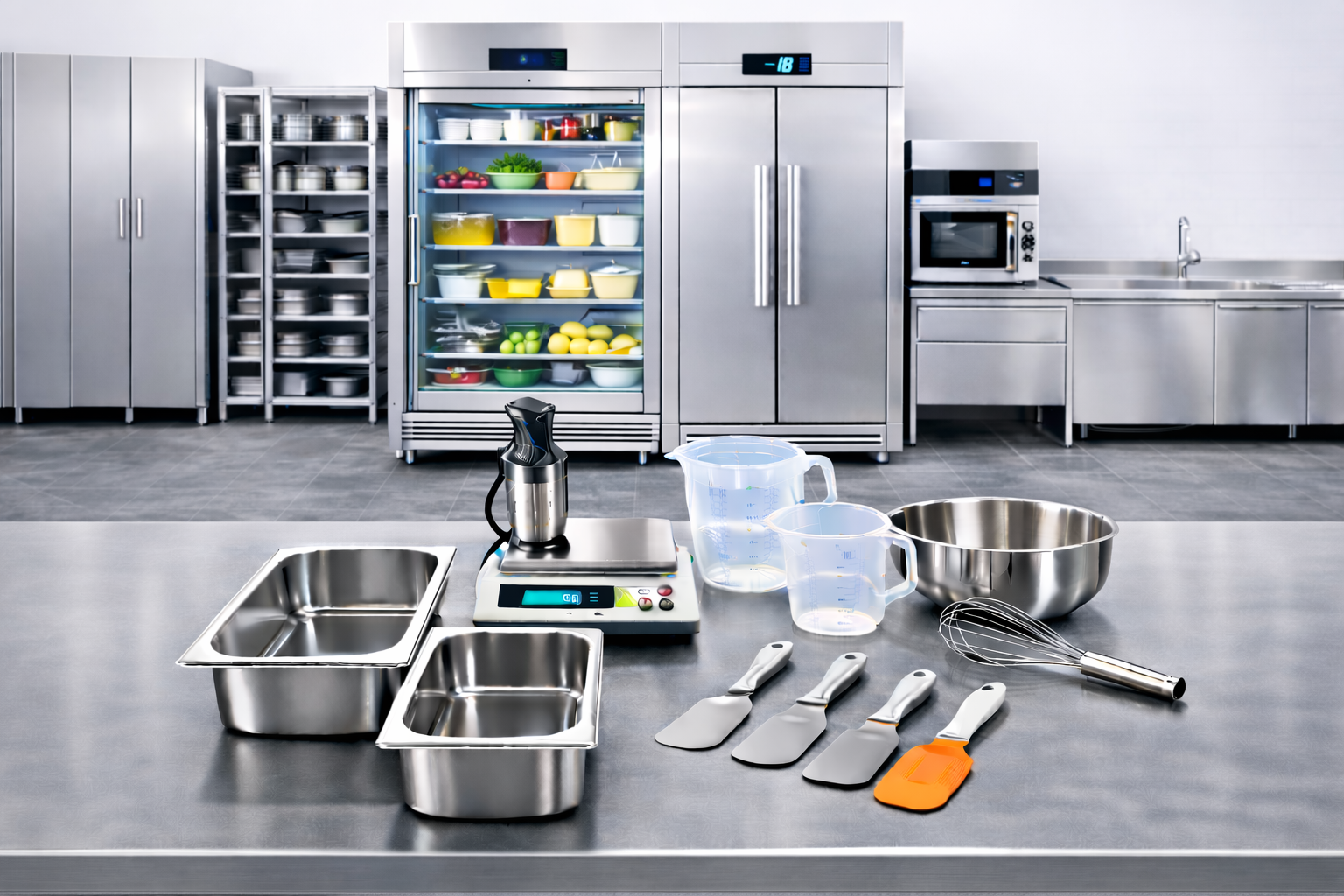
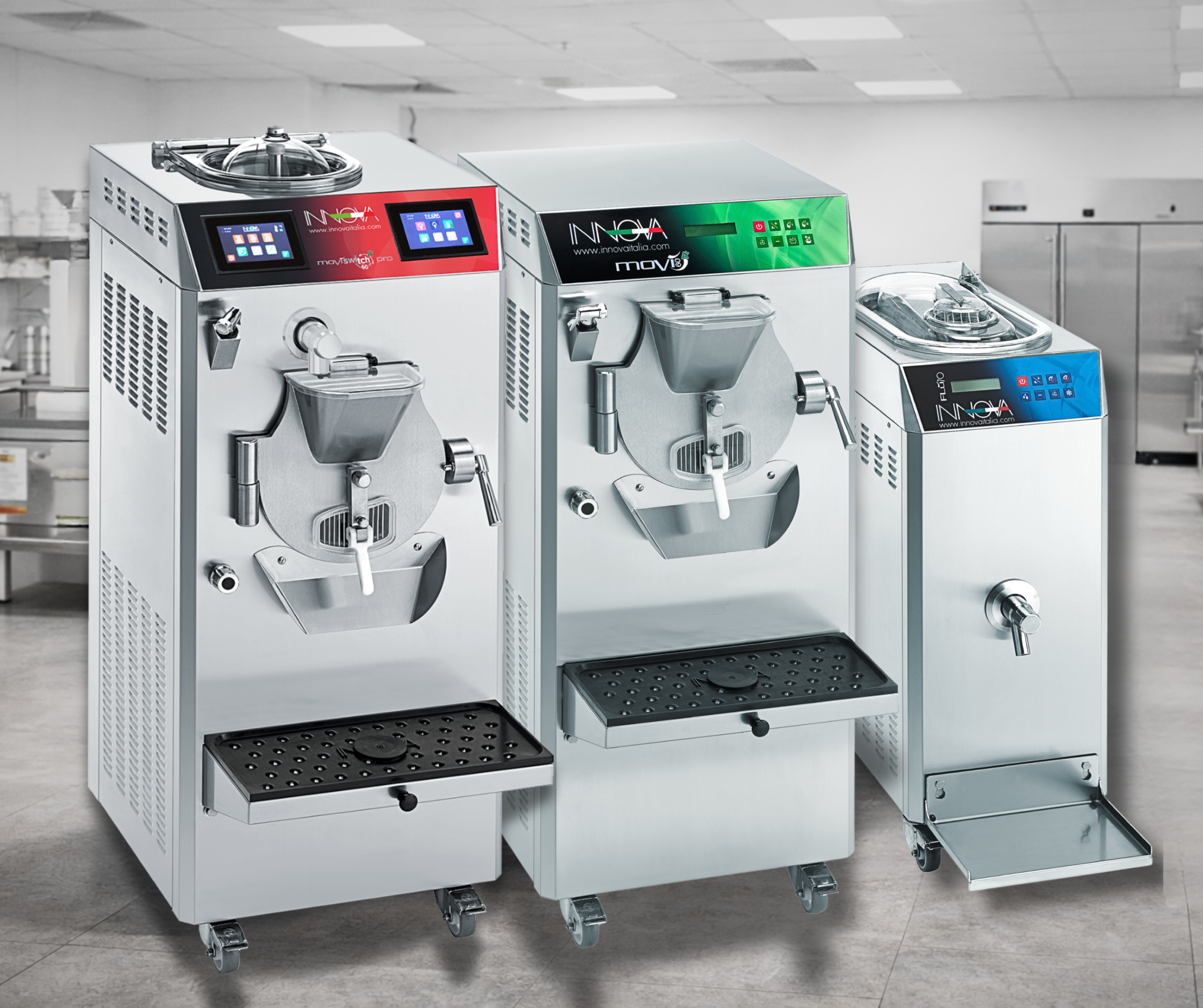
Here it isn’t just about buying machines, but about building a working system. The gelato machines — batch freezer, pasteurizer, or combined unit (read more here: how to choose the right gelato machine) — represent the first significant investment, between €15.000 and over €50.000, but everything else revolves around them: blast chillers between €3.000 and €8.000, positive- and negative-temperature refrigerators between €2.500 and €5.000, professional scales, mixers, stainless steel work surfaces, sinks with drainboards, stainless steel shelving and cabinets, plus professional utensils, operational small equipment, and installation costs. These components, often considered secondary, can add several thousand euros to the total cost of the lab.
For a detailed breakdown of all the equipment needed for a complete production lab, you can read here: what equipment do you need to open a gelato shop.
Another fundamental element concerns the layout of the spaces. This is where the real costs are determined, because a poorly designed lab doesn’t just create inefficiencies — it directly limits the ability to work and to sell, to the point of compromising the very functioning of the business. At that point, intervening becomes more complex, more expensive, and often too late.
In practice, this means not being able to handle peak demand, especially during seasonal peaks like the summer months: not having enough time to produce the gelato, not being able to restock the display case when flavors run out, and finding yourself without product right when it matters most. It can happen, for example, that a basic flavor like fiordilatte runs out and isn’t immediately available because there wasn’t time to make it again — with a direct loss of sales and continuity of service.
What other costs make up the investment in a gelato shop
Beyond the lab and the premises, there are other items that significantly impact the initial investment and are often underestimated in the early planning stages.
Sales area
After the lab comes the sales area. The gelato display case — which can cost indicatively between €10.000 and €25.000 — is only one of the components to consider: sales counter with cash register, fiscal printer or POS terminal, payment system, service organization, and, where space allows, tables, chairs, or stools, all directly affect the initial investment.
In some cases, complementary equipment is added — such as the coffee machine — which helps increase the average ticket value.
Overall, the sales area can indicatively account for €12.000 to €28.000, depending on the configuration chosen and the level of structure of the project.
Fit-out and furnishings
To this is added the fit-out: illuminated sign, furnishings, interior lighting, finishes, paintwork, and window graphics.
These are elements that don’t only affect aesthetics, but also customer perception.
The fit-out, often underestimated, can indicatively cost between €5.000 and €12.000, depending on the level of finish and the image you want to convey.
An important variable is the size of the premises and the presence of seating: tables, chairs, or stools can affect the investment, while a smaller space without an on-site consumption area reduces this cost item.
Initial marketing
Then comes marketing: logo, visual identity, website, photography, printed materials, social media, advertising campaigns, custom packaging, and a possible opening event.
In concrete terms, this phase can require an indicative investment between €1.000 and €3.000, depending on the level of customization and the chosen strategy.
In particular, communication — through tools such as social media — plays an increasingly central role in the visibility of the gelato shop: it allows you to make yourself known right from the start, communicate your product, your way of working, and what sets your offering apart — such as particular flavors, selected ingredients, vegan or lactose-free options — creating an initial direct contact with customers, especially in the early stages after opening.
Administrative and regulatory area
Alongside all of this there is the administrative side: business registration, local permits and authorizations, health and food safety permits, registration with the commercial registry, possible company formation through a notary public, food safety training (HACCP), and legal and accounting consulting.
Administrative requirements also involve variable costs, which typically range between €2.000 and €5.000, considering all the paperwork and consulting services required.
For more information on food hygiene and safety requirements, you can consult the official HACCP guidelines issued by the food safety authority of your country.
Raw materials and initial working capital
To this are added the initial raw materials (for example: milk, cream, sugars, fruit, cocoa, and other ingredients), along with cones, cups, consumables, and cleaning products. To cover these expenses and face the first months of activity, it is also essential to plan for adequate initial working capital, which is needed to cover utilities, insurance, contributions, and operating expenses without finding yourself short of cash precisely at the most delicate phase of the launch.
This item is often underestimated in the initial phase, but it is frequently decisive in ensuring an uninterrupted operational start: having adequate stock and sufficient financial coverage allows you to manage the business launch with greater continuity and without having to improvise.
Summary of costs to open a gelato shop
At this point it can be useful to pause for a moment and look at the investment as a whole, because this is exactly where the numbers begin to take on a more concrete meaning.
|
Cost item |
Realistic indicative range |
|
Premises and renovation works |
€25.000 – €55.000 |
|
Production lab |
€40.000 – €80.000 |
|
Sales area |
€12.000 – €28.000 |
|
Fit-out and furnishings |
€5.000 – €12.000 |
|
Initial marketing |
€1.000 – €3.000 |
|
Administrative and paperwork |
€2.000 – €5.000 |
|
Raw materials and working capital |
€5.000 – €17.000 |
|
Total |
€90.000 – €200.000 |
These are indicative values, which can vary depending on the characteristics of the project, the choices made, and the conditions of the premises. Not all items carry the same weight, and they are not independent of each other.
The most common mistakes
When it comes to opening a gelato shop, many mistakes don’t come from obviously wrong choices, but from initial evaluations made without a complete vision of the project.
One of the most common is starting from the budget instead of from the structure of the business. A figure is set, and then everything is adapted to fit that limit, often ending up creating a gelato shop that, once open, cannot operate efficiently.
Another mistake concerns the production lab, which is seen only as an initial cost item rather than as the operational heart of the business. In reality, it is precisely there that timing, work organization, real long-term costs, and the ability to manage seasonal peaks effectively are determined.
Then there is the issue of space distribution. Premises chosen or designed without operational logic can seem adequate at first, but reveal significant limitations once the workflow increases, making everything slower and less efficient.
Finally, one of the most critical aspects is failing to plan for adequate working capital in the initial phase. Costs start immediately, while revenues take time to stabilize, and this gap is often what causes difficulties in the first months of activity.
These are mistakes that, taken individually, may seem marginal, but together they determine the solidity of the project, turning small initial choices into concrete problems that are difficult and expensive to correct.
Frequently asked questions about the cost of opening a gelato shop
How do you know if the budget is really sufficient? One of the most complex aspects isn’t defining a figure, but understanding whether it is actually consistent with the project you want to build. A budget can be considered sufficient only when it allows you to cover all the necessary components — works, equipment, fit-out, raw materials, and initial working capital — without having to cut essential elements of the project. It is precisely this gap between initial estimate and concrete execution that often creates difficulties.
Does it make sense to start with a lower investment than necessary in order to stay within budget? In some cases yes, but it’s a choice that needs to be evaluated very carefully. Reducing the initial investment often means limiting certain components of the project, and this can directly affect how the business will operate over time — from the location of the premises to the organization of the work. It isn’t just a question of how much you spend, but of what you are building. In many cases, this choice leads to having to intervene after opening, with higher costs and less margin for error.
Is initial working capital really necessary? Yes, and it is one of the most underestimated components. Even with a well-planned investment, the first months require financial coverage to face operating expenses, utilities, and fixed costs before the business reaches stability. Not accounting for it means exposing yourself to avoidable difficulties. It is often precisely the lack of this coverage that puts the first months of activity in trouble, even when the project has been built correctly.
Why can renovation works on the premises change the final cost so much? Renovation works are one of the most unpredictable variables, because they depend on the initial condition of the premises and the adjustments required. Two seemingly similar spaces can require completely different interventions, and it is precisely this variability that makes it difficult to estimate the cost precisely from the start. It is in this phase that the most significant deviations from the initial budget often arise, with unplanned interventions that can have a significant impact on the overall investment.
Does the choice of equipment only affect the initial cost, or also future management? It directly affects the long term as well. It isn’t just about how much you spend at the beginning, but about efficiency, energy consumption, ease of use, work organization, and the management of the production volumes required. A choice made without considering these aspects can lead to higher operating costs, limitations in daily management, and the need to purchase additional equipment.
When does it make sense to stop and review the project before opening? When doubts emerge about cost distribution, lab organization, or overall sustainability. It is precisely in this phase that a careful review allows you to avoid more complex and expensive interventions later, keeping control of the project from the very beginning.
➡ Are you considering opening a gelato shop?
At this point one thing is clear: there is no single cost that applies to everyone — the cost of your project depends on the choices you make at the beginning, and it is precisely these choices that determine whether it will start on solid foundations or with limitations that are difficult to correct.
Contact us: with our many years of experience, we’ll help you analyze your specific case, the choices to make, and the evaluations needed before starting, giving you concrete feedback on the costs of your project.
Next article
Equipment for Opening an Artisan Gelato Shop: The Complete Laboratory Guide

Latest news
News, curiosities, events and trends: find out what revolves around ice cream
13.05.2026
How much does it cost to open a gelato shop in 2026? Real costs, investment, and what to truly expect
15.04.2026
Equipment for Opening an Artisan Gelato Shop: The Complete Laboratory Guide
12.02.2026
How to Choose an Artisan Gelato Machine When Opening a Gelato Shop

8.07.2025
