


How to Choose an Artisan Gelato Machine When Opening a Gelato Shop
Why the Choice of the Machine Affects Daily Work
When opening a gelato shop, one of the first decisions concerns the choice of the artisan gelato machine.
This is not just a technical evaluation: it is a choice that will accompany your work every day, influencing the organization of the laboratory, production times, and the overall management of the business.
Those who are just starting out often face a recurring question: which gelato machine should I choose?
Understanding the differences between the various available solutions is essential to avoid rushed decisions and to build a sustainable working method from the very beginning.
Choosing an artisan gelato machine means, first and foremost, choosing how you want to work every day.
This is why it becomes important to understand the production process and the role each piece of equipment plays within it.
Before evaluating machines, it is useful to clarify how daily work will be organized in the laboratory.
For example, a choice can influence very practical aspects: how long it takes to prepare a flavor, how many production cycles you can manage in a day, and how much flexibility you have when peak demand arrives.
The Gelato Process: Why It’s Essential to Understand It Before Choosing a Machine
Even before choosing a gelato machine, it is important to have a clear view of the process.
Gelato is not created through a single step, but through a sequence of phases, each with a specific role.
In a typical production process, the mixture goes through six main phases:
1. Mixing the ingredients
This is the recipe phase: balancing, weighing, and dissolving the ingredients. This is where the foundation of the final product is created.
2. Pasteurization
This is the hot phase of the process, necessary to ensure food safety and give structure to the mixture.
3. Aging
This is a controlled resting time that allows ingredients to bind better together, contributing to stability and balance in the base.
4. Freezing (Batch Freezing / Churning)
This is the cold phase: the mixture is rapidly cooled, incorporates air, and develops the typical gelato structure.
5. Hardening and storage (if applicable)
In some production setups, gelato is further stabilized and stored to better manage consistency over time.
6. Display service
This is the final phase, the one visible to the customer, involving texture, scoopability, holding performance, and daily management.
Understanding these phases helps clarify a key point: gelato machines are not simply interchangeable alternatives, but cover different phases of the process or, in some cases, multiple phases together.
Knowing these phases is essential because each machine intervenes at a specific point in the process and affects how production is managed every day.
The Combination Machine: When It Makes Sense to Choose It
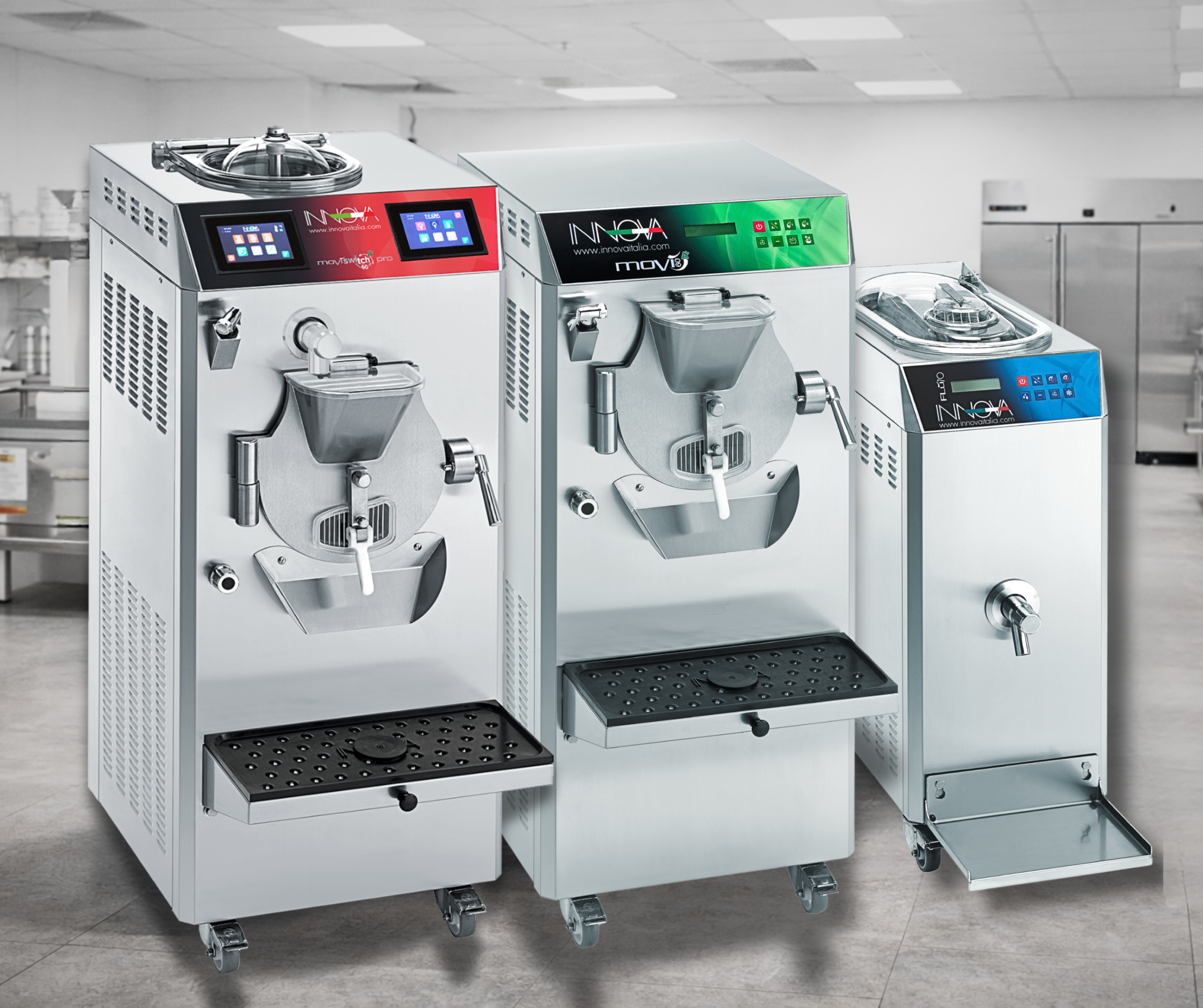
A combination gelato machine combines pasteurization and freezing into one solution.
This makes it possible to work on one flavor at a time, following the order and needs of the day.
One of the main advantages of this solution is customization: each flavor can have its own dedicated base, with specific recipes depending on the result you want to achieve.
From a practical point of view, a combination machine is particularly suitable for smaller laboratories, because it takes up less space than a system made up of two separate machines. This makes it easier to organize the lab, especially in the early stages of the business.
In terms of initial investment, it can also be a more accessible choice: you purchase a single machine instead of a separate pasteurizer and batch freezer, keeping costs under control without sacrificing production process control.
Technically, the combination machine works with a thermal shock between the hot phase and the cold phase, since the mixture is pasteurized and then immediately frozen.
For some gelato makers, this is a positive factor because it contributes to a fresher and more immediate gelato structure.
Others, however, prefer aging the base, which is only possible with a pasteurizer, in order to achieve a more stable and structured product over time.
This is not a matter of right or wrong, but rather a different approach to work and to the final result.
The combination machine is a practical solution when the goal is to work with flexibility, managing production progressively throughout the day.
It should also be considered that the combination machine can be used only as a batch freezer, further increasing laboratory flexibility.
The Pasteurizer: Why It Is Central to Production
The pasteurizer is a gelato machine dedicated to the hot phase of production.
It is used to mix ingredients, create the emulsion, and ensure food safety.
With a pasteurizer, a gelato base is produced in a single process, preparing an amount of mixture sufficient to create multiple flavors during the day, by adding ingredients cold.
A key aspect of the pasteurizer is aging.
The ability to age the base allows ingredients to bind better together. A well-aged base results in a more stable and balanced gelato.
The pasteurizer is therefore a central machine for those working with more planned, structured production oriented toward higher volumes.
The pasteurizer is often the starting point for those who want to work with a more structured method and plan production more efficiently.
The Batch Freezer: The Step That Defines the Final Result
The batch freezer is a gelato machine that handles the cold phase of the production process.
This is where the liquid mixture becomes gelato.
During freezing, the mixture is rapidly cooled while being processed, allowing air incorporation and the formation of the typical gelato structure.
This step directly affects creaminess, scoopability, and stability of the final result.
The batch freezer is essential in every gelato shop, but it can take on different roles depending on the organization of the laboratory.
In some businesses it works together with the pasteurizer; in others it represents the only machine used, especially when choosing to work only with cold processing, using ready-made bases or bases produced externally.
This is the moment when the work becomes tangible and visible in the display case.
The batch freezer is the step that transforms the mixture into gelato and therefore directly impacts the final result in the display case.
Which Criteria to Consider to Choose the Most Suitable Solution
There is no universally correct artisan gelato machine.
The choice depends on how you imagine your daily work: how much customization you want, how much space you have available, and how you want to manage production throughout the day.
To gain clearer direction, it can be helpful to start with a few practical questions.
1. How much production do you want to manage each day?
This is not just about “how much gelato you want to make,” but how many production cycles you can handle during the day.
A more continuous production requires a different organization compared to a laboratory that works progressively, flavor by flavor.
2. How do you want to distribute work throughout the week?
Some gelato shops concentrate production on dedicated days, while others prefer to produce every day in a more flexible way.
This choice directly affects the type of system best suited and how the laboratory is managed.
3. How much space and how many people do you have in the laboratory?
Available space and the number of people working simultaneously completely change how operations are carried out.
In a small laboratory, simplicity and machine compactness can become a decisive factor to work consistently.
4. Do you want to prioritize flexibility or production efficiency?
A combination machine often allows work to be managed with greater flexibility, especially in the early stages.
A setup with separate pasteurizer and batch freezer, on the other hand, allows parallel work and increases efficiency over time.
Many gelato shops that are opening initially choose the combination machine for its flexibility and simplicity.
Others prefer to start with separate pasteurizer and batch freezer, especially if they foresee a more organized production from the beginning.
A typical example is during high season when more flavors are needed in a short time: in that case, the ability to manage multiple phases simultaneously can make a difference in daily organization.
The important thing is that the gelato machine adapts to your project, not the other way around.
The choice depends not only on the product you want to achieve, but above all on the working rhythm you want to sustain every day.
Our Experience in Choosing Gelato Machines
Choosing a production system is not just a technical decision, but a strategic choice that affects laboratory organization, working times, and daily management.
Experience gained in the gelato machine sector shows that fully understanding the production process and the role of each piece of equipment helps build a gelato shop that is more aware, sustainable, and consistent over time.
For this reason, evaluating different solutions means thinking first about the process and then about the equipment.
In this path, INNOVA can support you in choosing the most suitable solution for your project, helping you evaluate the option that best fits your working style and your goals.
Do you have doubts? Let’s talk about it.
Because choosing the right artisan gelato machine means building, day after day, your own way of working.
Next article
Repair or Replace Your Gelato Machine?

Latest news
News, curiosities, events and trends: find out what revolves around ice cream
13.05.2026
How much does it cost to open a gelato shop in 2026? Real costs, investment, and what to truly expect
15.04.2026
Equipment for Opening an Artisan Gelato Shop: The Complete Laboratory Guide
12.02.2026
How to Choose an Artisan Gelato Machine When Opening a Gelato Shop

8.07.2025
